
When Can Veneers Cause Bad Breath
Key Takeaways
-
Veneers should not smell bad
A healthy veneer should feel smooth and clean. If there is an odor, bacteria may be collecting around the veneer, gumline, or tooth underneath. -
Bad breath often starts at the gumline
Plaque can build up where the veneer meets the gum and cause odor, bleeding, puffiness, or a bad taste. -
Poor veneer fit can trap bacteria
If a veneer edge is rough, loose, bulky, or not sealed well, food and bacteria can collect around it. -
A dental exam finds the real cause
Mints and mouthwash may cover the smell for a little while, but they do not fix the cause.
Quality Veneers should not cause bad breath when they fit well, feel smooth, and the gums around them are healthy.
Here’s the thing. If your veneers smell bad, the smell usually does not come from the veneer itself. It usually comes from bacteria, plaque, trapped food, gum inflammation, dry mouth, or a veneer edge that is hard to clean.
A patient loves the way their smile looks, but something feels off. Maybe there is a bad taste. Maybe floss smells bad in one spot. Maybe they keep wondering, “Is this normal?”
Sometimes it is simple. Sometimes it needs treatment. Either way, it is worth looking at.
Do Veneers Cause Bad Breath?
Veneers don’t usually cause bad breath. Veneers are thin shells that cover the front of your teeth. They are often used to improve color, shape, size, or spacing. When they are done well, they should look good and feel clean. But teeth are not just about looks.
Teeth are the gateway to overall health. So when we talk about veneers, we also have to talk about the gums, the bite, the edges, and how easy everything is to clean. Function and aesthetics together. That is the balance.
The American Dental Association explains that bad breath that does not go away can be linked to gum disease, and gum disease is often connected to plaque bacteria.
So if your veneers are connected to bad breath, the real issue is often bacteria around the veneers. Not the porcelain itself.
Why Veneers May Smell Bad
Veneers may smell bad because bacteria have found a place to hide.
That place might be very small. A tiny ledge. A rough edge. A spot between two teeth. A gum pocket. A little space where food keeps getting stuck.
You might be wondering, “But I brush every day. How can this still happen?” And that’s normal.
Sometimes it is not about trying harder. Sometimes the area is just not easy to clean. If the veneer edge is bulky or uneven, plaque can sit there. If the gums are inflamed, bacteria can sit deeper under the gumline. That can create odor.
Common causes include plaque buildup, food trapping, dry mouth, bleeding gums, decay near the edge of the veneer, or old veneers that do not seal as well as they used to. Let’s slow that down.
A veneer should meet the tooth smoothly. If it does not, that little edge can become a bacteria trap.
Bad Breath After Getting Veneers
Experiencing Bad breath after getting veneers can feel embarrassing. But it is also something dentists hear about more often than people think.
Sometimes it happens during the temporary stage. Temporary veneers are not the final result. They can feel a little rougher. They can also catch more plaque if you do not clean carefully. That does not always mean something is wrong.
But if the smell keeps coming back after the final veneers are placed, that needs a closer look.
You may notice a sour taste. Or floss may smell bad after cleaning around one veneer. Or you may feel like food keeps catching in the same spot. Those little clues matter. They help us find the real cause.
Gum Health Around Veneers
Having gum health around veneers matters because the gums frame the smile.
They also protect the teeth. If the gums are swollen, bleeding, tender, or puffy, bad breath can happen. It may be mild at first. You may not feel pain right away. That part is important. Gum disease can occur quite early on. Not always painful. Not always obvious.
Plaque left on teeth can harden into tartar, and tartar buildup can lead to gum disease. Only a dental professional can remove tartar once it forms.
So if your gums bleed around veneers, do not just brush harder. That can make the tissue more irritated.
Instead, have the area checked. We want to see if the problem is plaque, gum inflammation, cleaning technique, veneer shape, or something deeper. Beautiful dentistry requires patience.
Veneer Margins and Bad Breath
Veneers and bad breath are closely connected. The margin is the edge where the veneer meets your natural tooth. It is a tiny area, but it matters a lot.
If that edge is smooth, the floss should pass through normally. The gum should stay calm. Food should not keep packing into the same place. If that edge is rough or open, bacteria can sit there. That can smell.
A rough margin can also irritate the gum. Then the gum gets inflamed. Then it gets harder to clean. Then, more bacteria build up. See how that cycle starts?
It is not always dramatic. Sometimes it is just one annoying spot. A patient may say, “Every time I floss this tooth, it smells bad.” That is worth checking.
How To Get Rid Of Bad Breath With Veneers
Finding out how to get rid of bad breath with veneers starts with finding the cause.
Mouthwash can help for a little while. Mints can help for a little while. But they do not fix a rough veneer edge, gum inflammation, decay, dry mouth, or food trapping. Start with the basics.
Brush twice a day. Clean between your teeth every day. Clean your tongue gently. Drink water. Keep your dental cleanings on schedule. Simple matters. But if one veneer smells bad over and over, do not keep guessing.
In the office, we may check the gumline, polish a rough spot, take X-rays, clean below the gumline, check the bite, or look for decay near the veneer edge.
Sometimes the fix is small. Sometimes an old veneer needs to be replaced. We never rush healing. If the gums are irritated, we want the tissue healthy before making bigger decisions.
How To Prevent Bad Breath With Veneers
Understanding how to prevent bad breath with veneers comes down to clean, healthy edges.
Brush near the gumline gently. Floss every day. If floss catches, shreds, or smells in one spot, pay attention to that. Your mouth is giving you information.
A water flosser may help some people clean around dental work. It can be useful, especially if food gets trapped. But it does not replace a dental exam if something smells bad every day. Dry mouth matters too.
Saliva helps rinse the mouth. When the mouth is dry, odor can get worse. Some medications, mouth breathing, dehydration, and certain health issues can make dry mouth worse. So yes, veneer care is about the veneers.
But it is also about wellness. It is about the whole mouth working together.
When Veneers Need To Be Replaced
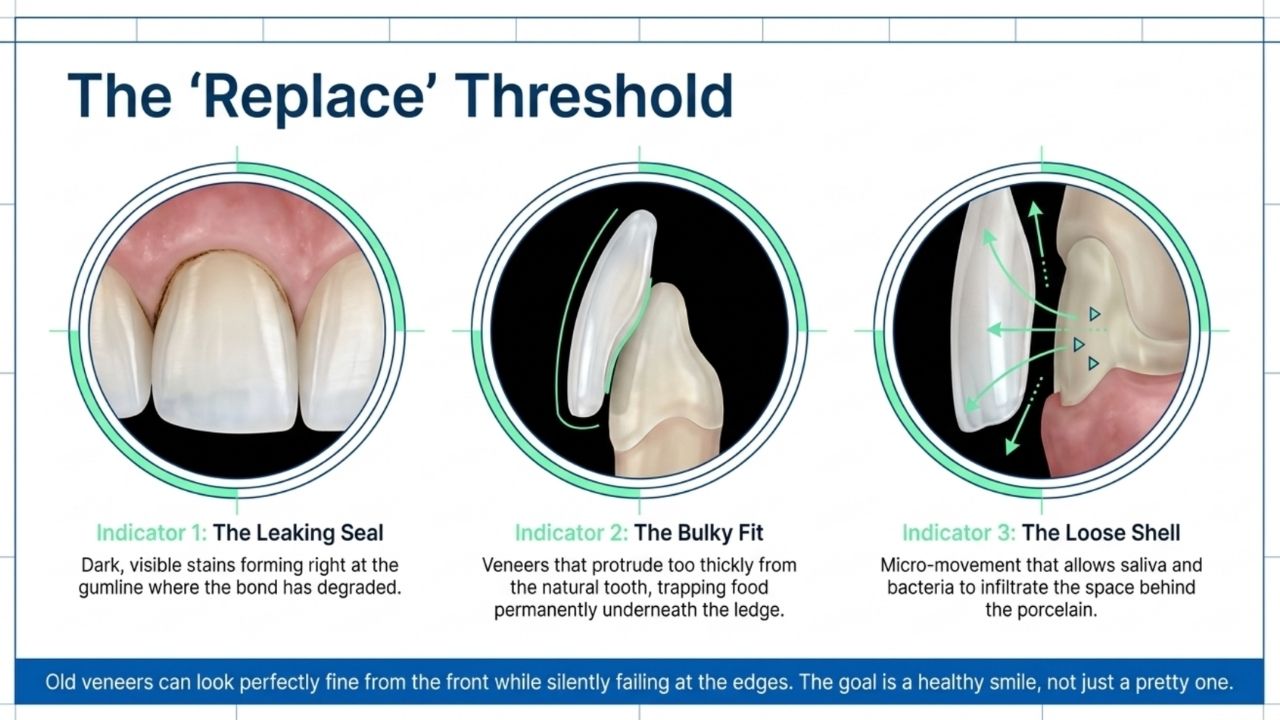
When veneers need to be replaced, it is usually because they no longer fit, seal, look, or function the way they should. Old veneers can still look okay from the front.
But the edge may be stained. The gum may be inflamed. Food may keep getting stuck. The bite may feel off. Or there may be decay starting around the veneer. These are signs that a dentist should take a closer look.
Replacement is not always the answer. Sometimes the area just needs cleaning or polishing. Sometimes the gums need care first.
But if the veneer is loose, leaking, cracked, poorly shaped, or trapping bacteria, replacing it may be the healthier choice. The goal is not just a pretty smile. It is a clean smile. A comfortable smile. A smile that supports your health.
FAQs About Veneers and Bad Breath
What is veneer breath?
Veneer breath is a phrase people use when they notice bad breath around veneers.
It is not an official dental diagnosis. Most of the time, it means bacteria, plaque, gum inflammation, food trapping, dry mouth, or a veneer edge may be causing odor.
What causes veneer breath?
Veneer breath is usually caused by bacteria around the gums or veneer edges.
The cause may be plaque, trapped food, bleeding gums, dry mouth, tooth decay, or a veneer that is rough, bulky, loose, or hard to clean around.
How do veneers cause bad breath?
Veneers can cause bad breath when they create a place for bacteria to collect.
That may happen if the veneer edge is not smooth, if food gets trapped, if the gums are inflamed, or if decay starts near the edge of the veneer.
Do veneers make your breath stink?
Veneers should not make your breath stink.
If your breath changed after veneers, the gums, the veneer fit, the cleaning access, and the tooth underneath should be checked.
Do veneers smell bad?
Veneers should not smell bad when they are clean and healthy.
If they do smell bad, the area may need a dental cleaning, gum care, polishing, repair, or replacement.
What does veneer breath smell like?
Veneer breath may smell sour, musty, rotten, or like a bad taste that keeps coming back.
The smell can change depending on whether the cause is trapped food, gum inflammation, decay, or bacteria.
Can temporary veneers cause bad breath?
Temporary veneers can sometimes cause bad breath because they may feel rougher or collect plaque more easily.
They are short-term restorations. If you notice a bad smell, bleeding, or a bad taste while wearing temporaries, call your dentist.
Can bad breath mean my veneers are leaking?
Bad breath can sometimes mean a veneer margin is leaking, but not always.
It can also come from gum inflammation, plaque buildup, dry mouth, tongue bacteria, or another dental issue. A dentist can check the seal and the tooth underneath.
When should I call a dentist about bad breath with veneers?
Call a dentist if bad breath lasts more than a few days, keeps coming back, or happens with bleeding gums, swelling, sensitivity, food trapping, a loose veneer, or a bad taste.
You do not have to wait until it gets worse. A simple exam can usually point us in the right direction. Stop by Ocean Dentistry Co. and get to know our staff.

Dr. Gamburg is a trusted family, cosmetic, restorative, and implant dentist in Ocean Township, NJ, serving patients at Ocean Dentistry Co. in Oakhurst. A Rutgers School of Dental Medicine graduate, Dr. Gamburg completed his General Practice Residency at Jersey Shore University Medical Center and advanced training in dental implants through the NYU College of Dentistry Postgraduate Implant Program.
Dedicated to providing exceptional dental care, Dr. Gamburg offers a full range of services, including preventive dentistry, smile makeovers, restorative treatments, dental surgery, and implant dentistry. He continues to expand his expertise through regular continuing education and active involvement in professional organizations, including the American Dental Association, the Academy of General Dentistry, and the New Jersey Dental Association.
Fluent in Hebrew and conversational in Russian and Spanish, Dr. Gamburg connects with patients from diverse backgrounds. Known for his warm approach and focus on patient comfort, he is committed to making every visit a positive experience. Whether you need routine care or advanced treatment, Dr. Gamburg and Ocean Dentistry Co. provide compassionate, high-quality dentistry for families in Oakhurst and the greater Jersey Shore community.