
Is My Tooth Socket Healing Correctly After A Tooth Extraction?
If you’re trying to figure out how can I tell a normal socket after tooth extraction is healing correctly, there are a few simple things to look for. It should feel protected, look like it’s closing in, and slowly get better each day.
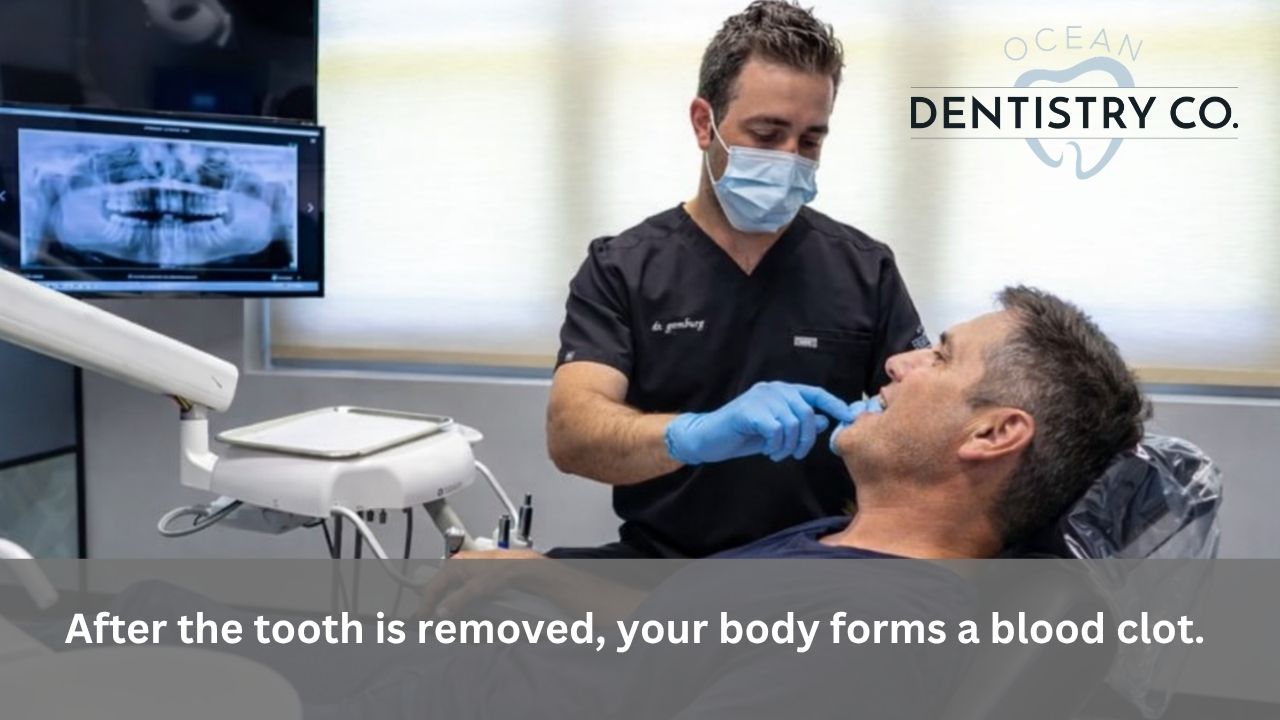
Right after the tooth is removed, your body forms a blood clot. That clot is the start of everything. It protects the area and helps new tissue grow.
Over the next few days, the look of the socket will change. Dark at first. Then lighter. That’s normal.
Pain should ease up little by little. Not all at once. Just steady improvement.
Key Takeaways
- Healing should improve, not worsen
- Color changes are part of normal healing
- Pain should ease, not spike
- The clot is key to recovery
- Slow progress is still good progress
What does a healthy tooth extraction site look like in the first week?
If you’re wondering what a healthy tooth extraction site looks like in the first week, it can look a little rough at first, and that’s completely normal.
The first couple of days, you’ll notice a dark clot sitting in the socket. It may feel sore. Maybe a little swollen.
Around day three or four, it often turns white or yellow on top. That’s where people get nervous. You might be wondering if it’s an infection.
It’s not. It’s your body covering the area. By the end of the week, things will calm down. Less swelling. Less tenderness. The socket starts to look smaller.
We never rush healing. It takes the time it needs.
What are the signs of a healthy tooth extraction socket vs. a dry socket?
If you’re trying to understand the signs of a healthy tooth extraction socket vs. a dry socket, the difference usually comes down to direction. A healthy socket gets better. Slowly, but clearly. The soreness becomes easier to manage.
A dry socket goes the other way. Pain increases. It can spread toward your ear or jaw. It doesn’t settle down. You may notice a bad taste or smell that lingers. And when you look, it may seem like the socket is empty.
If something feels off, it’s okay to question it. You don’t have to figure it out alone.
Patient Testimonial
If you’re looking for great dental care, Dr. Gamburg and the staff are top notch. Unfortunately I recently needed 3 extractions and implants. The office offers up to date diagnostics and Dr. Gamburg explains available options. While the process isn’t fun, he makes it painless – seriously, almost no pain! Of course no pain is paramount, but the office is also extremely efficient with appointments running right on time. Highly recommend.
Connie S.
How do I know if my socket is healing correctly day by day?
If you’re wondering how your socket is healing day by day, focus on small changes. The first couple of days are usually the hardest. That’s expected.
After that, you should notice things getting a little easier. Eating improves. Talking feels more normal. The soreness softens. It doesn’t need to be perfect. It just needs to be moving forward.
Beautiful dentistry requires patience. Healing is part of that process.
What color should a healing gum be after extraction?
If you’re looking at the area and asking what color a healing gum should be after extraction, it’s normal for it to change over time.
At first, it’s dark. That’s the clot doing its job. Then it may look white or yellow. That’s new tissue forming. As healing continues, it turns back to pink.
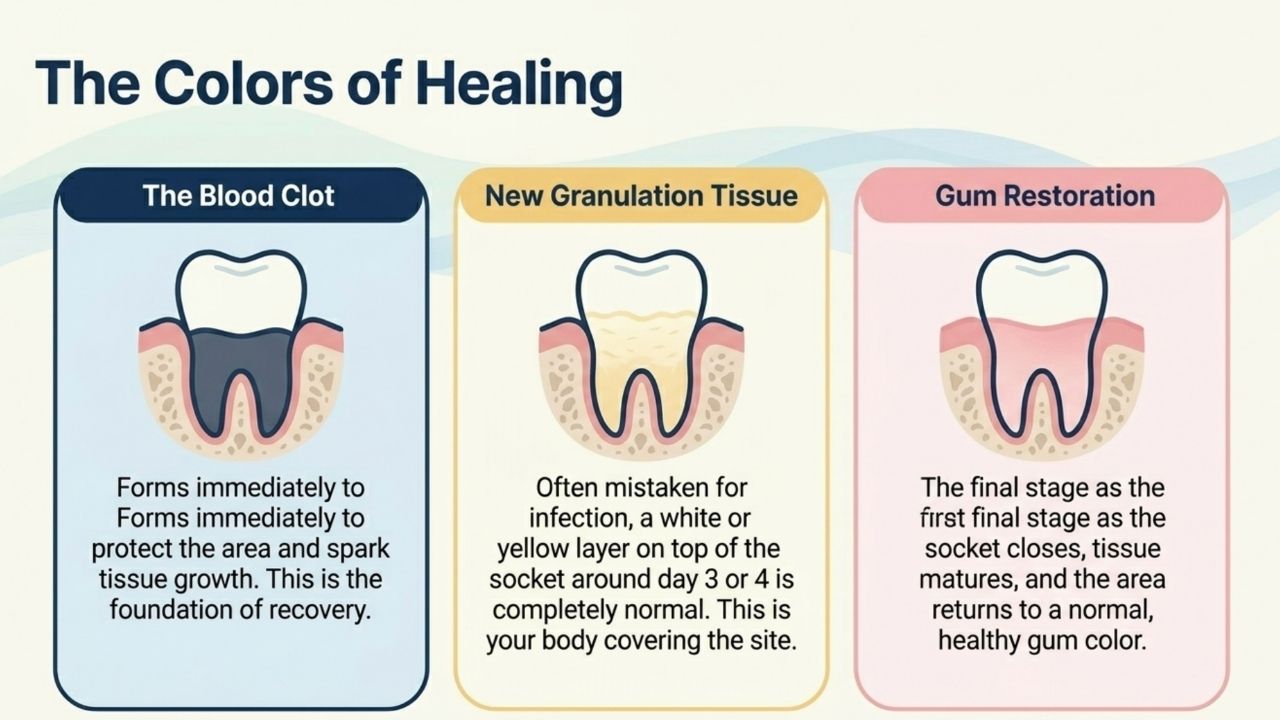
So if the color is shifting, that’s usually a sign that things are progressing. Teeth are the gateway to overall health. This is your body protecting that.
Signs of normal healing after wisdom tooth removal
If you’re paying attention to signs of normal healing after wisdom tooth removal, it can feel a little more intense, but the pattern is the same.
You’ll have swelling early. Some stiffness. Maybe trouble opening fully. Then things start improving. Swelling comes down. Pain fades. Movement returns.
Function and aesthetics together matter here, too. You want to feel normal again, not just look healed.
Which oral care products help maintain a normal socket after tooth removal?
If you’re thinking about which oral care products help maintain a normal socket after tooth removal, the answer is usually simple.
Saltwater rinses are usually enough. Gentle and effective. A soft toothbrush helps keep the area clean around the site. You don’t need to overdo it. Too much can actually slow things down. Balance is what helps healing.
Can I buy special rinses to protect a socket after wisdom tooth extraction?
If you’re wondering if you can buy special rinses to protect a socket after wisdom tooth extraction, you can, but you often don’t need to.
Most of the time, basic care works well. Saltwater does the job. Stronger rinses are used when there’s a specific reason. If you’re unsure, it’s always better to ask first. We guide you so you don’t have to guess.
Where can I find professional advice about socket care post-tooth extraction?
If you’re trying to find professional advice about socket care after a tooth extraction, the best place is the office that treated you.
At Ocean Dentistry Co., everything is built around helping patients feel comfortable and informed. From the moment you walk in, it’s about trust and understanding what’s happening with your health.
We focus on education because when you understand the process, it removes a lot of the fear. And if something doesn’t feel right, we’re here to help you through it.
FAQs
If you’re trying to tell whether your extraction site is normal or infected, look at how it’s changing. Normal healing improves each day. Infection usually worsens over time, with increasing pain and swelling.
If you’re comparing what a dry socket feels like to normal healing, dry socket pain is sharper and spreads. Normal healing stays in one area and improves gradually.
If you’re noticing white stuff in your tooth socket after extraction, it’s usually normal. That layer is part of healing, not infection.
If you’re wondering how long a tooth extraction socket takes to heal, early healing is about one to two weeks. Full healing takes longer, but you should feel steady improvement early on.
If you’re asking whether your gums should still hurt 5 days after extraction, some soreness is normal. But it should be less than before, not worse.
If you’re concerned about food getting stuck in the socket, it can happen. Gentle rinsing helps keep things clean without disturbing healing.
If you’re wondering when to call a dentist after a tooth extraction, reach out if pain increases after a few days, or if you notice a bad taste, smell, or exposed bone.
Healing isn’t instant. But when it’s moving forward, that’s what matters. Give a call today, or come by and get quick tour of Ocean Dentistry Co.
Ocean Dentistry Co.

Dr. Gamburg is a trusted family, cosmetic, restorative, and implant dentist in Ocean Township, NJ, serving patients at Ocean Dentistry Co. in Oakhurst. A Rutgers School of Dental Medicine graduate, Dr. Gamburg completed his General Practice Residency at Jersey Shore University Medical Center and advanced training in dental implants through the NYU College of Dentistry Postgraduate Implant Program.
Dedicated to providing exceptional dental care, Dr. Gamburg offers a full range of services, including preventive dentistry, smile makeovers, restorative treatments, dental surgery, and implant dentistry. He continues to expand his expertise through regular continuing education and active involvement in professional organizations, including the American Dental Association, the Academy of General Dentistry, and the New Jersey Dental Association.
Fluent in Hebrew and conversational in Russian and Spanish, Dr. Gamburg connects with patients from diverse backgrounds. Known for his warm approach and focus on patient comfort, he is committed to making every visit a positive experience. Whether you need routine care or advanced treatment, Dr. Gamburg and Ocean Dentistry Co. provide compassionate, high-quality dentistry for families in Oakhurst and the greater Jersey Shore community.